In cooperation with CBI Europe B.V. – a company of the TEREX Group
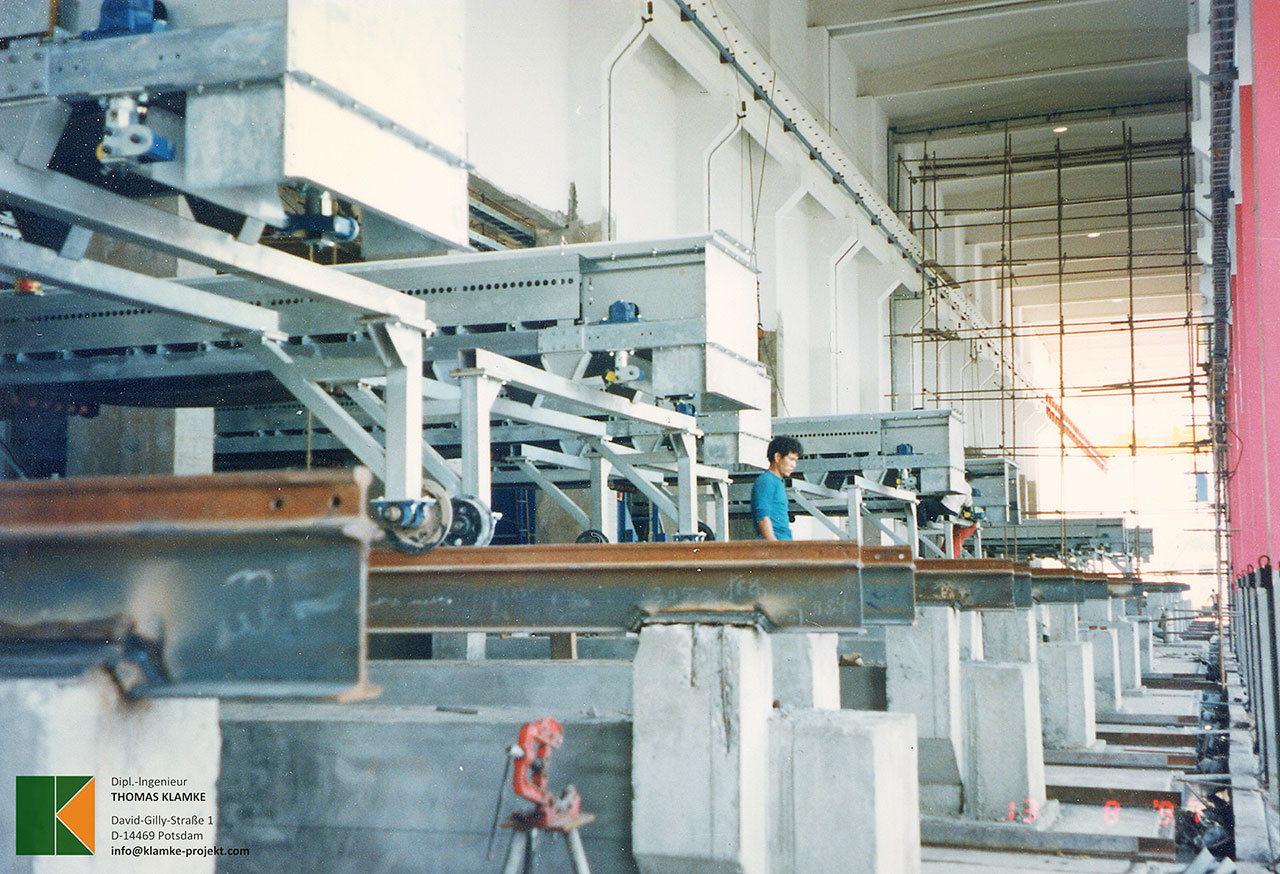
The Government of the Federal Republic of Germany has subsidised a German-Chinese joint venture enterprise for the construction of a waste sorting and separation plant with a sum of DM 50 million. Our office drew up the construction documents for 68 belt conveyors as well as various steel structures and, after delivery in China, oversaw the construction of the plant with the erection of sample conveyors.
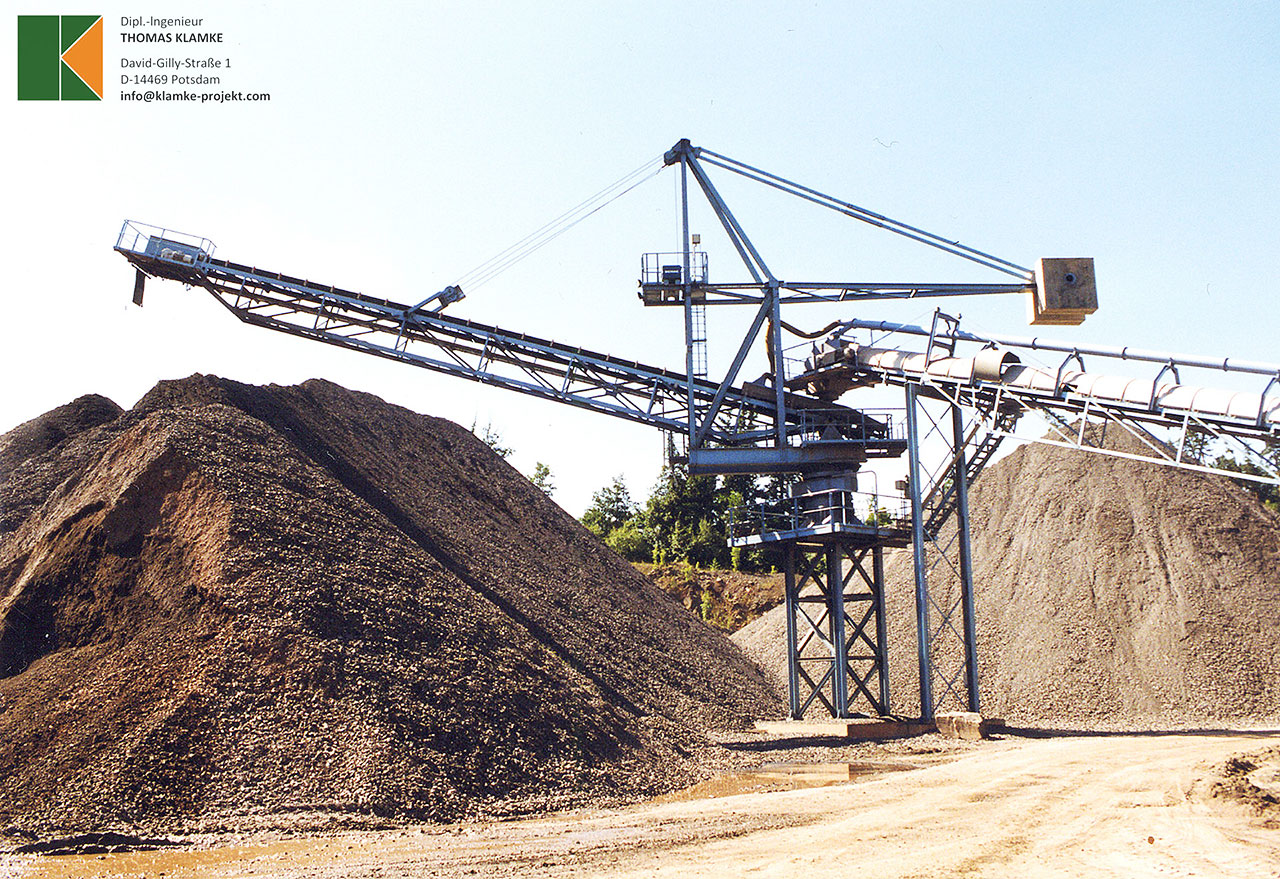
The belt stacker consists of an upper carriage which is rotatably mounted on a base frame. The upper carriage supports the following assemblies:
The motor-driven ball bearing supported ring is located between the base frame and the upper carriage. The stacker is used to pile bulk material onto kidney-shaped stockpiles. The variable inclination of the boom allows the conveyed material to be discharged at low heights. This avoids de-mixing of the material and limits the amount of dust that would be generated if the material were dropped from a great height.
Technical data:
You can find more information on the website of Hartsteinwerke Burgk GmbH & Co. OHG
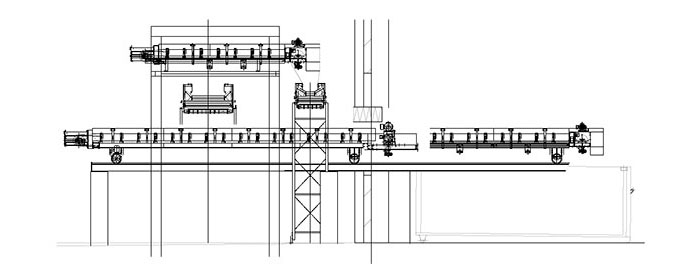
The mobile wagon unloading unit is classified as a self-propelled working machine under traffic law. Its permissible maximum speed allows it to be driven on the motorway. The conveyor system is mounted atop a standard truck chassis. It is basically similar in design to the belt stacker, although the technical implementation is quite different. First, a so-called “auxiliary frame” is mounted on the truck chassis. This auxiliary frame ensures better load distribution. The rotating upper carriage consists of a frame in which the belt conveyor and a weight move in opposite directions. When the main hydraulic cylinder is actuated, the belt conveyor moves and the counterweight is moved in the other direction via a cable deflecting device. In this way, the unit’s centre of gravity changes only slightly and the usual anchoring of the crane can be omitted. This considerably reduces the “game time” when unloading. Here the term "game" refers to a complete work cycle:
The motor-driven ball bearing supported ring is located between the base frame and the upper carriage. The stacker is used to pile bulk material onto kidney-shaped stockpiles. The variable inclination of the boom allows the conveyed material to be discharged at low heights. This avoids de-mixing of the material and limits the amount of dust that would be generated if the material were dropped from a great height.
Technical data:
The mobile unloading unit was completely developed in-house, manufactured in various workshops under our supervision, assembled, installed and handed over, ready for operation, to the customer. After 4 hours of operation the team was well-practised and able to achieve the projected output.
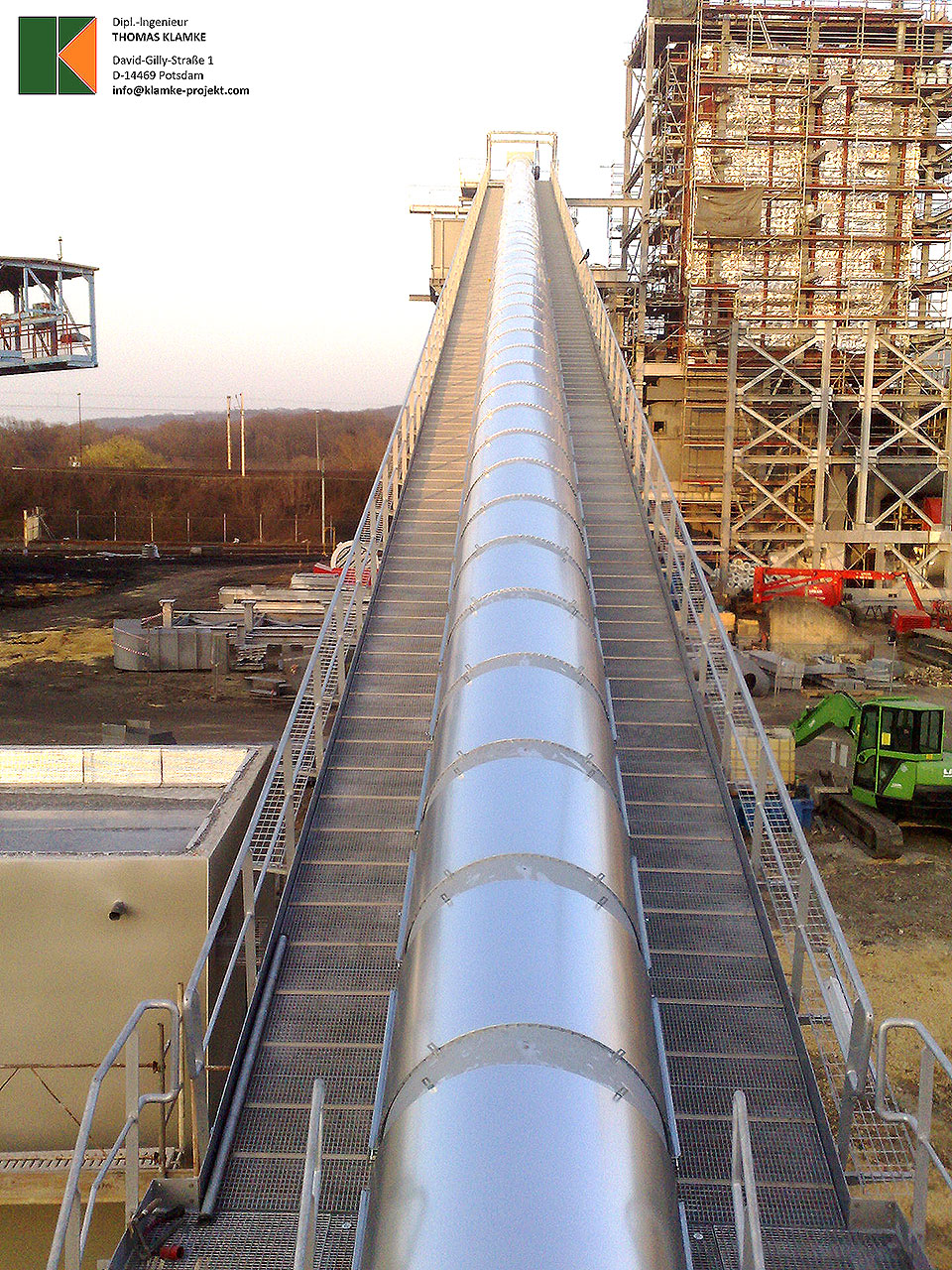
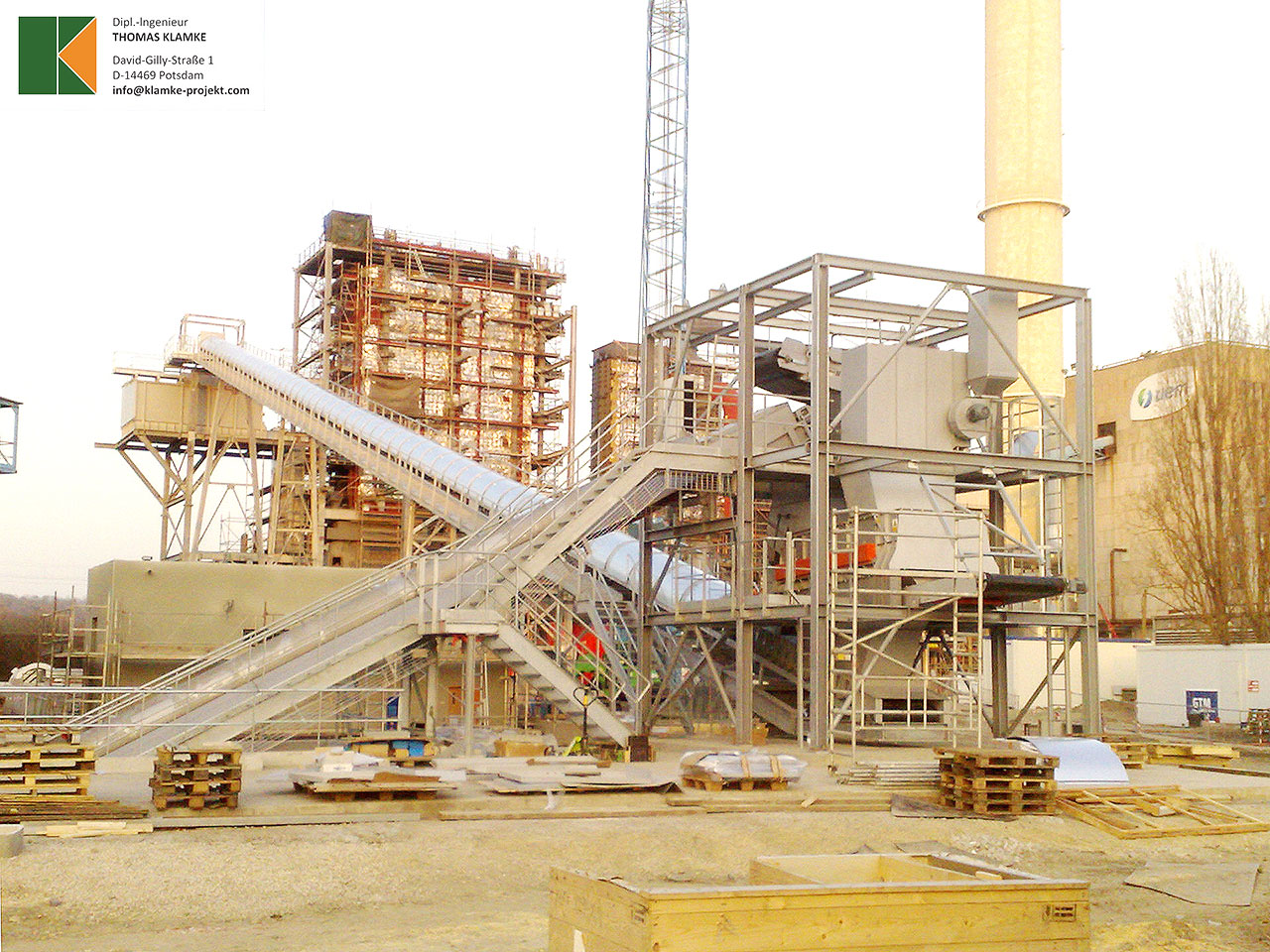
A modern block-type thermal power station burns wood chips and generates electricity and heat for supply to the Metz region (Lorraine). The power station operates seasonally from September to April, when district heating is required.
More information at the power plant operator UEM
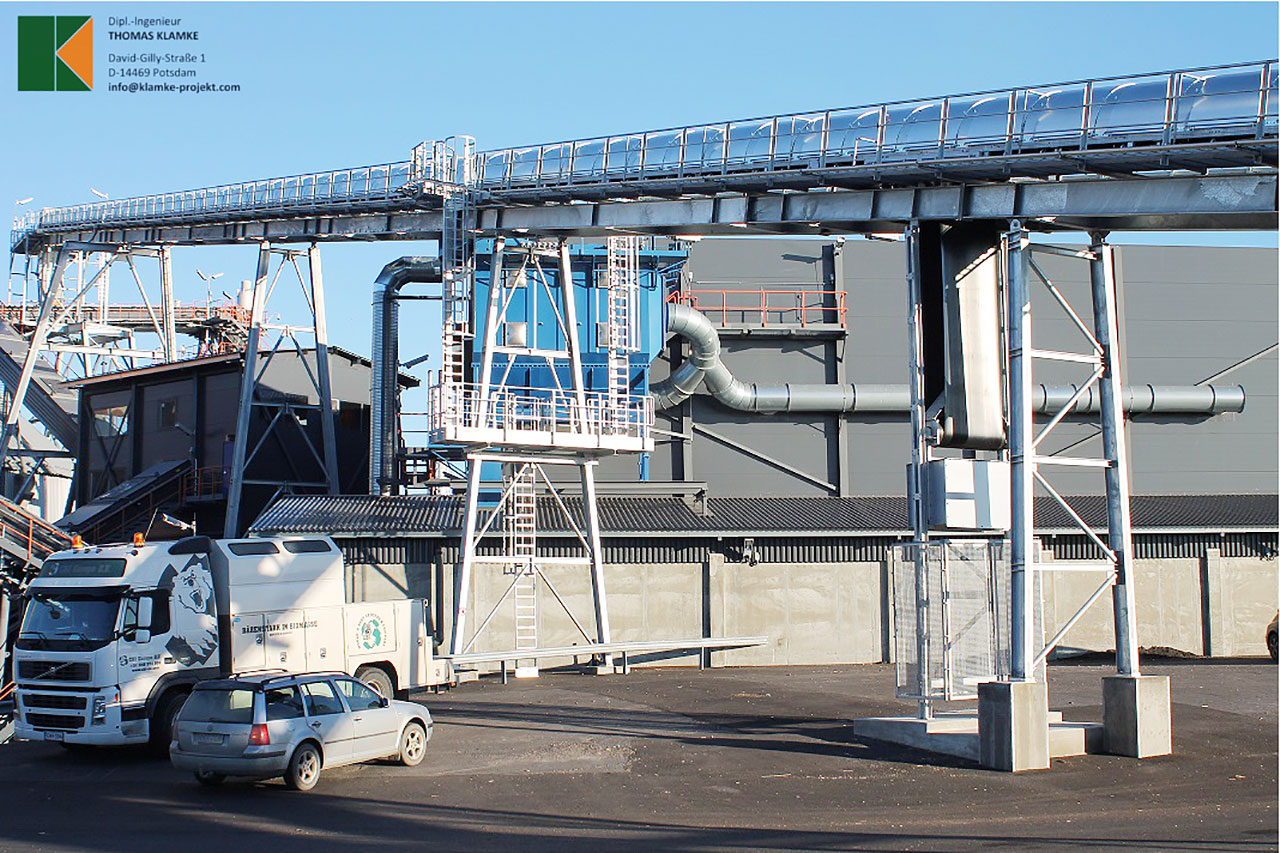
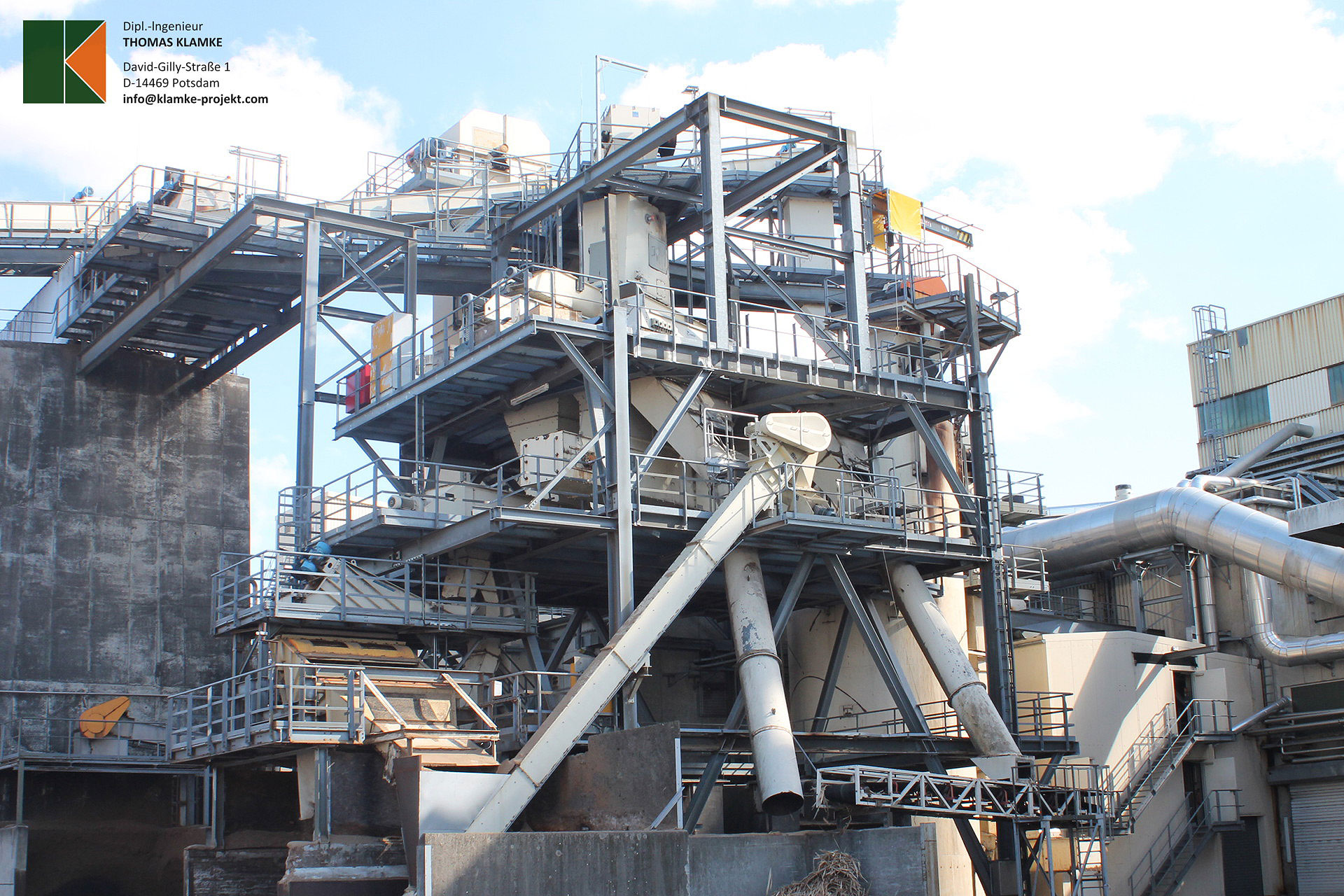
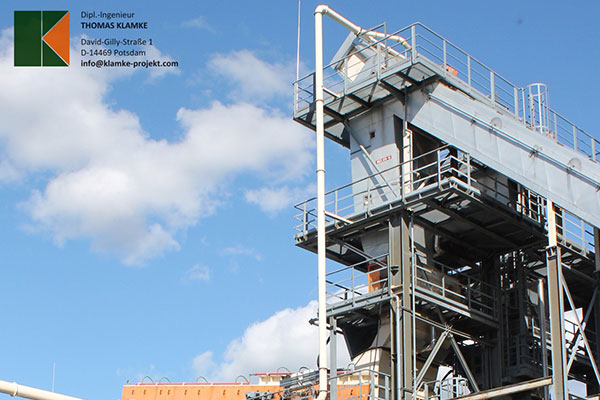
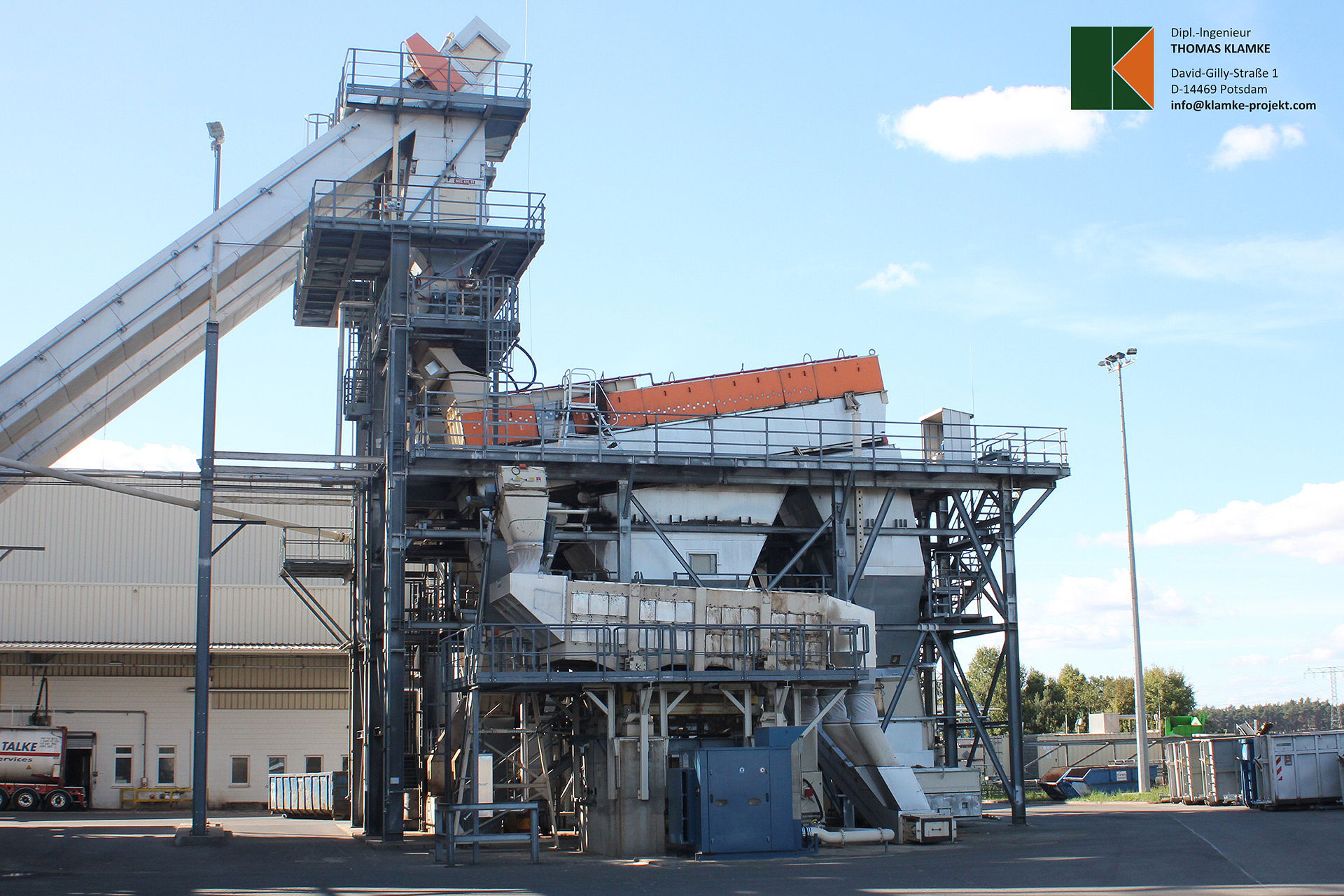
The screening station classifies wood chips into different fractions and enables the feeding of different production lines. The customer provides the machinery. Our office prepared the complete project including the works planning for production, the concept for the partial dismantling of the existing equipment and the installation and commissioning of the new equipment.

The converted railway carriage as a building bridge
An unconventional idea of the former company director and DPD co-founder Horst Walter Schröter was to use a disused Swiss Railways sleeping car as a bridge between two buildings in Raunheim near Frankfurt.
The carriage is constructed as a self-supporting body. The static proof for use of the carriage as a bridge was prepared by Dipl.-Ing. Thomas Klamke.
The Kiebitzberg ® in Havelberg in Havelberg performed the conversion.
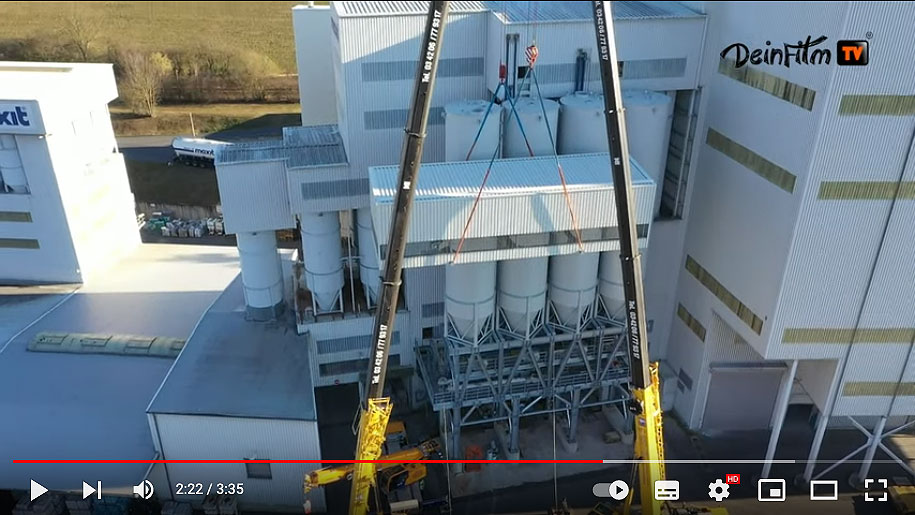
Still from the video report (click the image to view the video)
Maxit Baustoffwerke GmbH in Krölpa (Thuringia) extends its capacity for anhydrite by installing four new silos 2.000 tons all together. Maxit keeps its ability of delivering highly requested material for anhydrite floors even during the maintenance periods of the mill plant.
Klamke's team was responsible for the complete Structural Calculation, the delivery of all the steelwork (except the 4 silos) and the assembling of all units at the construction site.
Umtec Halle GmbH manufactured the silos in its best known quality.
The existing treatment plant will be expanded from a capacity of 300,000 m³ to 670,000 m³ of wastewater per day. The sewage sludge is temporarily stored in silos with flat bottoms and sliding frames which were manufactured according to plans by Dipl.-Ing. Thomas Klamke.
Andritz Gouda supplied special dryers, so-called “paddle dryers”. The conditioned sewage sludge is used as fertiliser.
(Source: ANDRITZ GOUDA PADDLE DRYERS FOR ANY TYPE OF MUNICIPAL SLUDGE SEPARATION – PRODUCE BIO-SOLIDS FOR USE AS FERTILISER AND SOIL IMPROVER)
The HMS Group based in Tartarstan, Russia, is building a plant for the treatment of sewage sludge in Kazan, the capital of Tartarstan. The construction documentation for the local fabrication of the silos with flat bottoms and sliding frames was drawn up by Dipl.-Ing. Thomas Klamke in Russian.
The particleboard industry is constantly striving to increase the efficiency and product output of its plants. As part of this effort, product properties are improved, the consumption of resources is reduced, and products such as wastewater from chip washing are fed into closed loops and recycled.
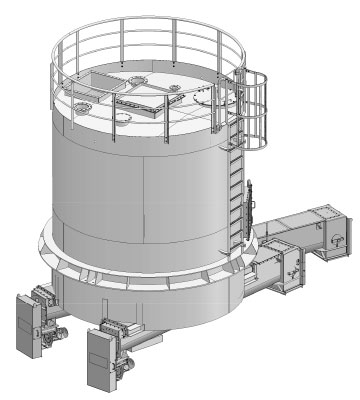
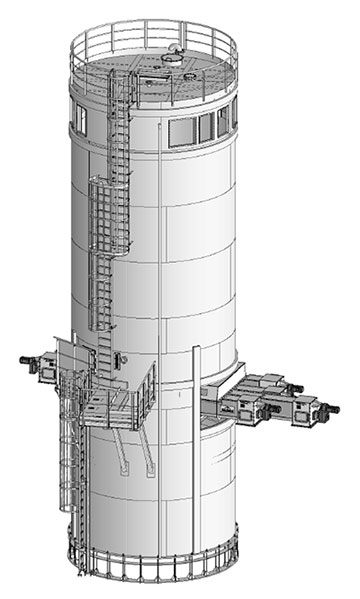
The graphic shows a wood chip silo with bottom screw conveyors and sliding frame.